
Obtaining Death Certificates in St. Lucie County Florida
St. Lucie County death records are kept by the Florida Department of Health in Port St. Lucie. This office serves residents on the Treasure Coast. Death certificates prove that someone has died. Families need them for legal matters. The state keeps these records safe. Florida law sets the rules for who can get copies.
St. Lucie County Quick Facts
Where to Get St. Lucie County Death Records
On NW Milner Drive in Port St. Lucie, the Florida Department of Health handles all death record requests. Staff can help you in person. They also take mail and online orders. The office is open Monday through Friday.
You can visit the office in Port St. Lucie. The staff will check your ID. They will print copies for you. This is the fastest way to get records. Most visits take less than an hour. The office closes for lunch from noon to 12:30 p.m. St. Lucie County follows Florida Statute Chapter 382. This law says death records are not public for 50 years. Only family and legal reps can get copies. You must prove who you are. You must also show why you need the record.
| Office | Florida Department of Health in St. Lucie County |
|---|---|
| Address | 5150 NW Milner Drive, Port St. Lucie, FL 34983 |
| Phone | (772) 462-3800 |
| Hours | Monday-Friday, 8 a.m. to 4:30 p.m. (closed 12:00-12:30 p.m. for lunch) |
| Website | stlucie.floridahealth.gov/certificates |
| Records Available | Death certificates from 2009 to present |
How to Request Death Records in St. Lucie County
Three ways exist to get death records in St. Lucie County. Each way works well. Pick the one that fits your needs. Some ways are faster than others.
In-person visits get you same-day service. Bring your ID and proof that you can get the record. The staff will check your papers. They print copies right there. This is the fastest way to get St. Lucie County death records.
Mail orders work well if you live far from Port St. Lucie. Send your form, ID copy, and payment to the address above. Include a self-addressed stamped envelope. Mail takes about 7 to 10 days to process. Allow extra time for the post office. Online orders go through VitalChek. Visit their website to start. You need a credit card for this. The site guides you through each step. Most online orders ship in 3 to 5 days. Rush service costs more.
Note: All orders need proof of your right to the death record.
Fees for Death Records in St. Lucie County
St. Lucie County charges specific fees for death records. The first copy costs $17. Each additional copy costs $17 as well. These fees are higher than the state standard. There are also extra fees for special services.
Additional fees include $10 for notary service. Rush processing costs $10 extra. A protective sheath costs $5. Shipping costs $1. Search fees are $2 per year with a max of $50. These fees apply to special requests.
The health department takes cash, check, or money order in person. Make checks payable to the Florida Department of Health. Online orders use credit cards through VitalChek. VitalChek adds a service fee for online orders.
Note: Ask about all fees before you place your order.
Types of Death Records Available
Two kinds of death certificates are offered in St. Lucie County. Each type serves a different need. Pick the right one for your task. The health department can help you choose.
A certified copy has the state seal. This proves it is real. You need this for legal tasks. Banks ask for it. So do insurance firms. Lawyers use it in court. Most official needs require this type. A plain copy costs less but has no seal. It works for family history. Some groups accept it for records. But it is not legal proof. You cannot use it to claim benefits. Make sure you know which type you need.
Visit the St. Lucie County Health Department to view their office and services.
The image shows the main health department building where death records are issued in St. Lucie County.
View the death certificates page for more details on ordering.
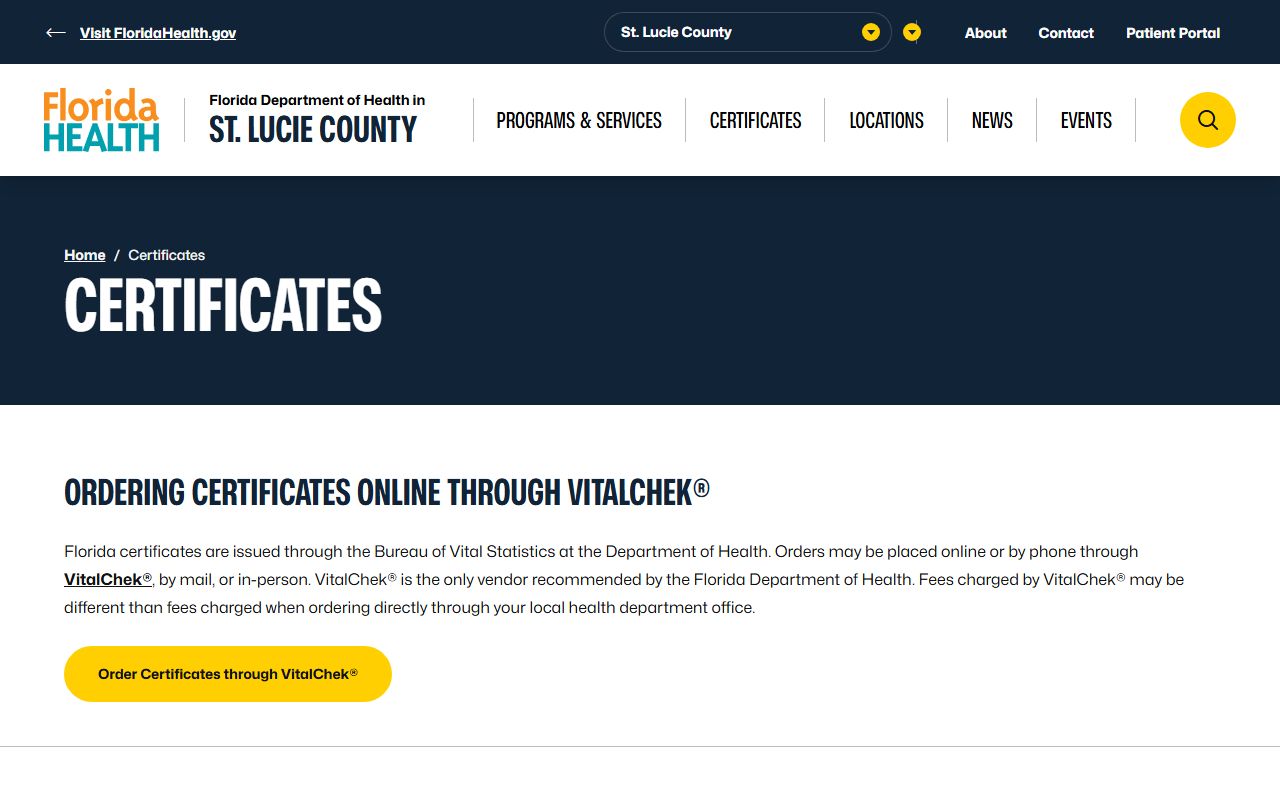
This page shows the forms and steps needed to order death records in St. Lucie County.
Note: Always ask what type of death record you need before you order.
Who Can Get St. Lucie County Death Records
Florida law limits who can get death records. This protects family privacy. The rules come from Chapter 382 of Florida Statutes. St. Lucie County follows these rules strictly. You must prove you qualify before getting a copy.
Immediate family can always get death records. This means spouses, parents, and kids. Grandkids can also request them. You must show your ID. You must also prove your family tie. A birth cert or marriage license works.
Legal reps can get death records too. This covers lawyers and execs of wills. You need court papers to prove your role. The health dept checks these docs. Agents with signed forms from family can also apply. People with a court interest may get death records. This means those named in wills. It also covers those with legal claims. You need proof of your stake. Call the office to learn what you need.
State Resources for St. Lucie County Death Records
The Florida Department of Health in Tallahassee keeps older death records. They have records from many years ago. You can contact them if St. Lucie County does not have what you need. The state office can help with records from before 2009.
You can also use the state vital records system online. This lets you order from anywhere. The state website has forms and info. Visit floridahealth.gov/certificates for state-level help.
Genealogy researchers can find help at the State Archives. They have old death records on file. Some records go back many decades. The archives are good for family history work. They are in Tallahassee.
Cities in St. Lucie County
St. Lucie County includes several cities and towns. All residents use the Port St. Lucie office for death records.
Other areas in St. Lucie County include Fort Pierce, St. Lucie Village, and Lakewood Park. All death records go through the main office at 5150 NW Milner Drive.
Nearby Counties
These counties border St. Lucie County. If you need death records from these areas, contact their health departments directly.